A spate of articles in editorials and opinion pieces regularly bemoans the deplorable state of the higher education system in our country. Common criticisms include a lack of infrastructure, insufficient teaching staff, a skewed PTR (Pupil Teacher ratio), and the perceived hasty rollout of the New Education Policy (NEP). These charges, often led by a section of the teaching community, are typically rooted in long standing legacies. However, the deeper issue lies not just in these surface complaints, but in a reluctance to address fundamental, structural challenges within higher education.
While many criticisms focus on surface-level problems, more critical, foundational issues are undermining the effectiveness of our education system. Sharpening our understanding of the core challenges is essential to meaningful reform. To assess the veracity of the much-touted allegations, it would be fair to begin by looking at some numbers. As per the AISHE (All India Survey on Higher Education) Report 2022-23, the number of universities, both State Public and State private, has increased to 1,168 in 2021-22, up from 903 in 2017-18. While student enrolments have increased, there has also been an increase in the teaching population from 1,284,755 to 1,597,688. Optically, the numbers do not create a fire alarm. The issue is more layered and therefore deserves a further drill-down.
Advertisement
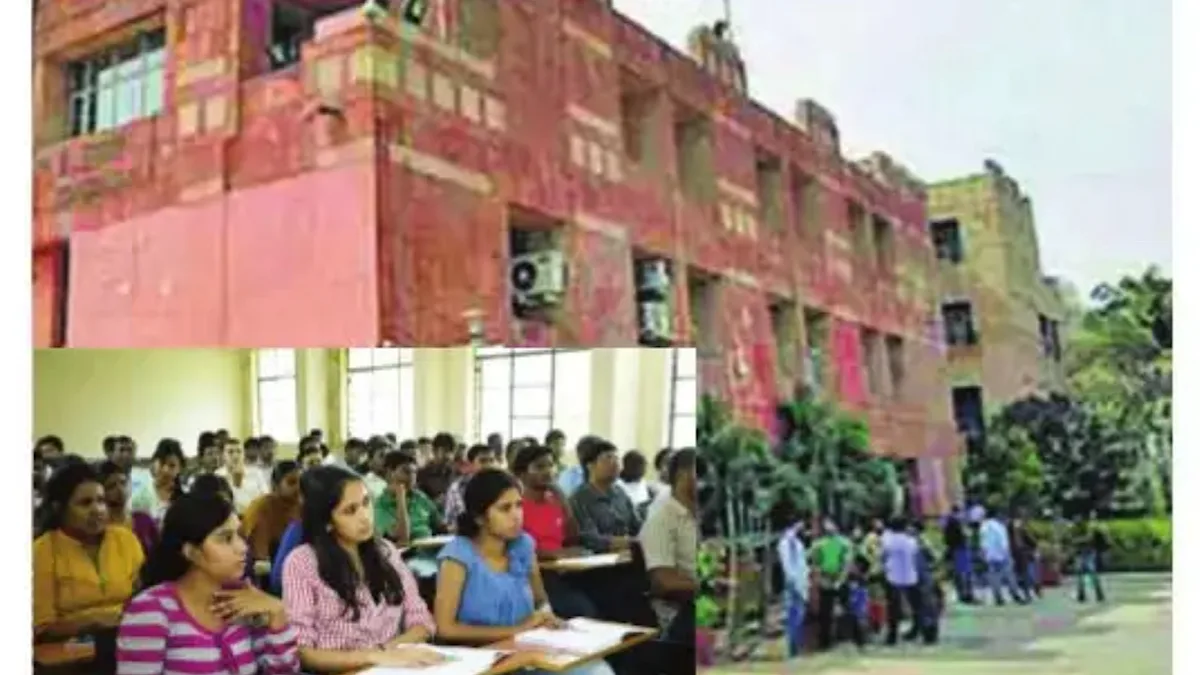
A deep dive into the available information on inadequate infrastructure and teaching resources reveals an interesting paradox. It shows that the groundswell in student enrolment is mainly happening in district colleges where first-time learners are filling up classrooms, creating an infrastructure shortage. Contrastingly, in prestigious institutions like JNU, Jadavpur University, Presidency University, to name a few, seats in subjects like Economics and Chemistry are going empty. Clearly, infrastructure is not a problem here. The more disquieting issue is that the students of the aforementioned institutions as well as others, disenchanted with the current educational framework, are seeking options which will boost their chances of employability.
While one can argue that education should not be designed on economic considerations alone, this growing apathy merits a rethink. Insofar as the outcry against the low pupil-teacher ratio is concerned, noted economist Karthik Muralidharan tellingly points out that the concern is overblown. “Increasing the number of teachers doesn’t help either… evidence suggests a weak relationship between PTR reduction and learning gains. For instance, a study by Abhijit Banerjee and colleagues found no effect of smaller class sizes on student learning”. Meanwhile, the gulf between education and employment continues to widen. Despite the growth in the graduate and post-graduate numbers, the April 2025 PLFS (Periodic Labour Force Survey) figures show urban joblessness standing at 6.5 per cent while rural unemployment numbers are at 4.5 per cent.
What is of greater concern is the fact that the unemployment percentage is 13.8 per cent in the 15-29 years age-group, higher than the overall average. In such a scenario, the outcry regarding building infrastructure and adding more ‘experienced’ teachers rings hollow. Subject-based theoretical teaching, based on narrow grooves, is untenable in a non-linear world. It becomes increasingly clear that the ongoing brouhaha on inadequate funding, PTR ratios, and infrastructure are deflecting the more significant issues affecting higher education which includes outdated curriculum design, ineffective teaching pedagogy, and resistance to change within a section of the teaching community.
These foundational issues demand focussed attention. As part of its new design, the NEP has taken remedial measures to move away from the archaic curriculum, bringing in flexibility and making it more holistic and interdisciplinary. Special emphasis has been given to inculcate ‘a higher order of cognitive capacities’ which encourages critical thinking and problem solving. The redesigned curriculum attempts to bridge the gap between education and employability, focusing on developing student capabilities which would be relevant to evolving employment needs. To complement the redesigned curriculum, the NEP boldly breaks away from the outdated Macaulayan pedagogic structure. Introducing a more student-centric, multidisciplinary, technology-enabled framework it encourages a blended model of pedagogy. This includes digital literacy. interdisciplinarity, problem solving and vocational exposure. The ITEP (Integrated Teacher Education Programme) is being implemented along with others. Unfortunately, the result of these efforts has been middling to poor. The foremost reason for this resistance is the resolute indifference of a large section of the teaching community in accepting and adapting to the change.
Ignoring the fact that education has to be viewed from a historical and relational context, they continue to deploy dated pedagogy, paying lip-service to the idea for a student-centric framework. The existing teaching community’s ingrained resistance to accept a syncretic approach is both behavioural and capability-driven. For example, congenital aversion to technology enablement is defended by citing the possible loss of interpersonal interaction and the affective dimension between teachers and students.
This argument is invalid as a blended teaching environment does not advocate the discontinuity of the human interface between teachers and students. Instead, keeping the generational perspective in mind, it recommends a balance between in-person teaching and technology-aided learning. It is evident that the reasons for this resistance, largely from academics belonging to humanities and social sciences, arise out of technophobia, fear of loss of identity and most importantly, fear of replacement.
Resistance research reveals that underlying emotional responses shape resistant attitudes. Instead of outright dismissal, there are carefully crafted justifications (loss of human contact, demographic divide in accessing technology, low teacher-student ratios, lack of infrastructure), couching the internal, emotional resistance to change. It is time for institutions and individuals alike to acknowledge that mindset change in the teaching community is essential for bringing about sustainable improvements in education. What educators have to internalise is that by acknowledging a new pedagogy which is seemingly opposed to the chalk and blackboard approach, they will be positing the principles of Hegelian dialectic, where the dynamic interplay of thesis and antithesis combines to arrive at synthesis. The journey would entail disruptions, but it would certainly engender a new education system that has enduring relevance in a fast-changing world. Embracing an adaptive mindset would be the best way to begin.
(The writer, a former CEO, is a commentator on socio-cultural issues)